AN EXCITING GIFT – PIANOLA ROLLS
Pianola roll paper has recently become quite popular in the mixed media junk journaling world, and I was keen to obtain some. My hubby has a friend who deals in old pianos and he asked him if he had any rolls to spare, and he brought them around today.
What is a pianola?
A pianola or player piano is a mechanical piano, a mechanism which attaches to a normal piano and plays tunes for you. It was invented about 100 years ago and it is very complex. It was very popular in the 1920s and 30s, and it is good that there are still so many in operation, and keen players too – I did a bit of research and found some fascinating and most enjoyable videos on YouTube. If you play the piece without any intervention, the notes will play accurately, but it will be completely mechanical and lack any musicality. The mechanism includes controls for tempo and dynamics and a skilled player can bring a really musical performance out of the machinery.
The tune is produced by a roll of paper with holes cut in it, rather like the punch cards that control Jacquard looms and early computing machines.
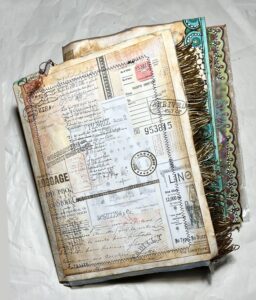
I have discovered, through my gift today, that the rolls are most attractive and come in sturdy boxes with interesting vintage labels on them.
Unboxing my pianola rolls
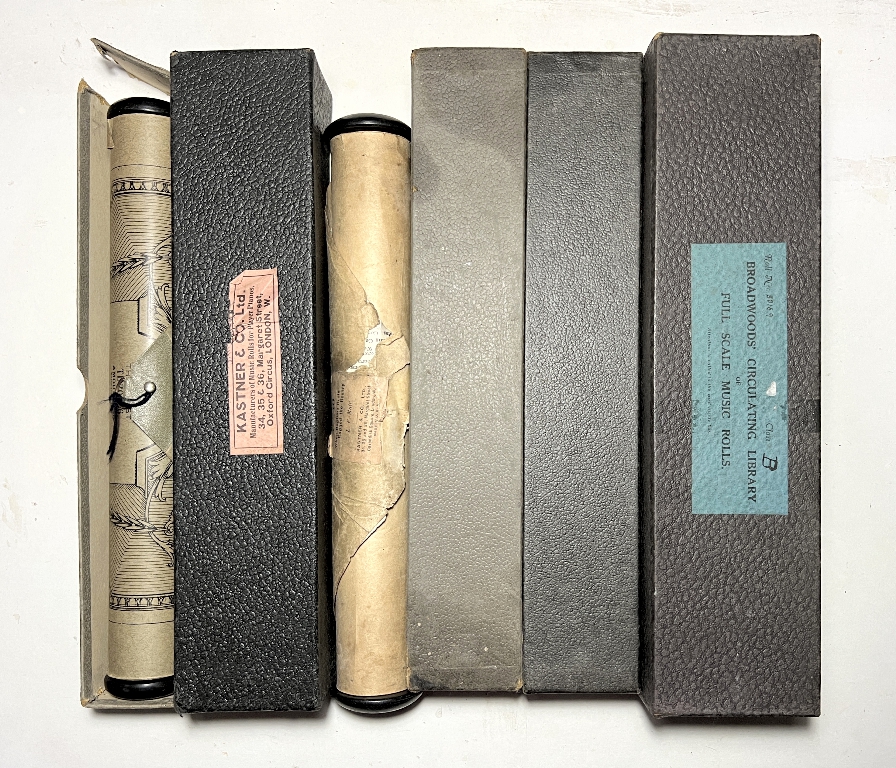
My hubby’s friend has given me all of these! Some of them are apparently over 40 feet long so I think this supply will see me out, no problem!
This one is very damaged on the outside and it looks a bit as if the mice have got at it. Inside it looks perfect, though.
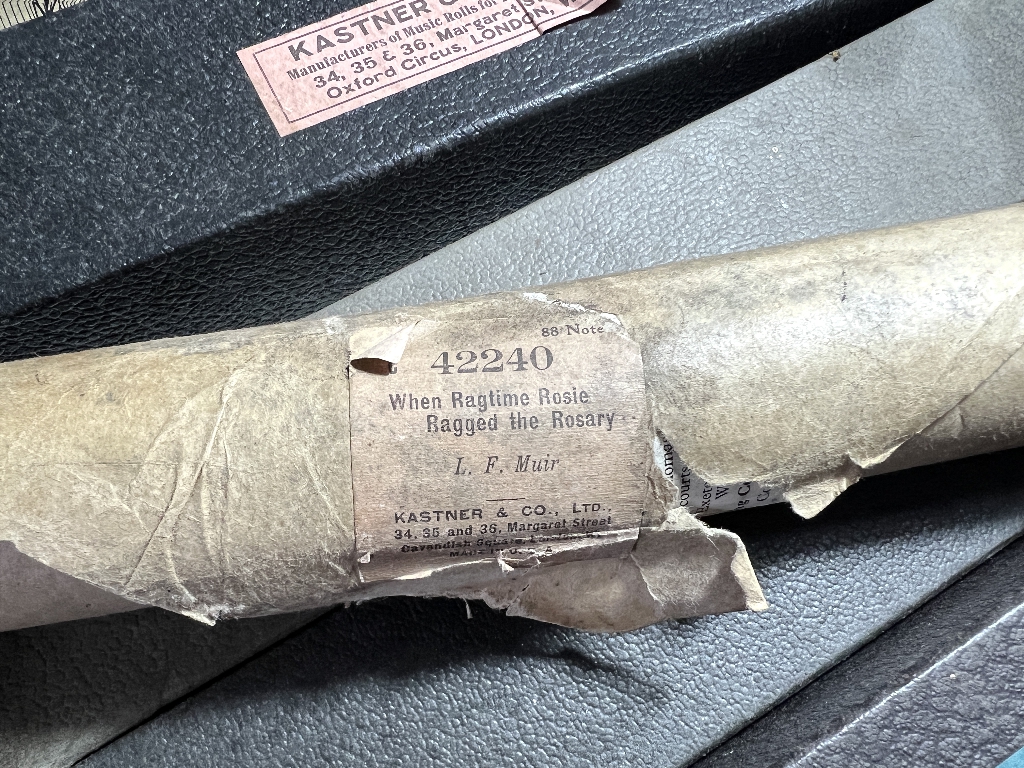
I particularly like the title of this song which is highly amusing: “When Ragtime Rosie Ragged the Rosary”!! The mind boggles… I’d love to hear it.
Gorgeous vintage labels on the attractively textured boxes.
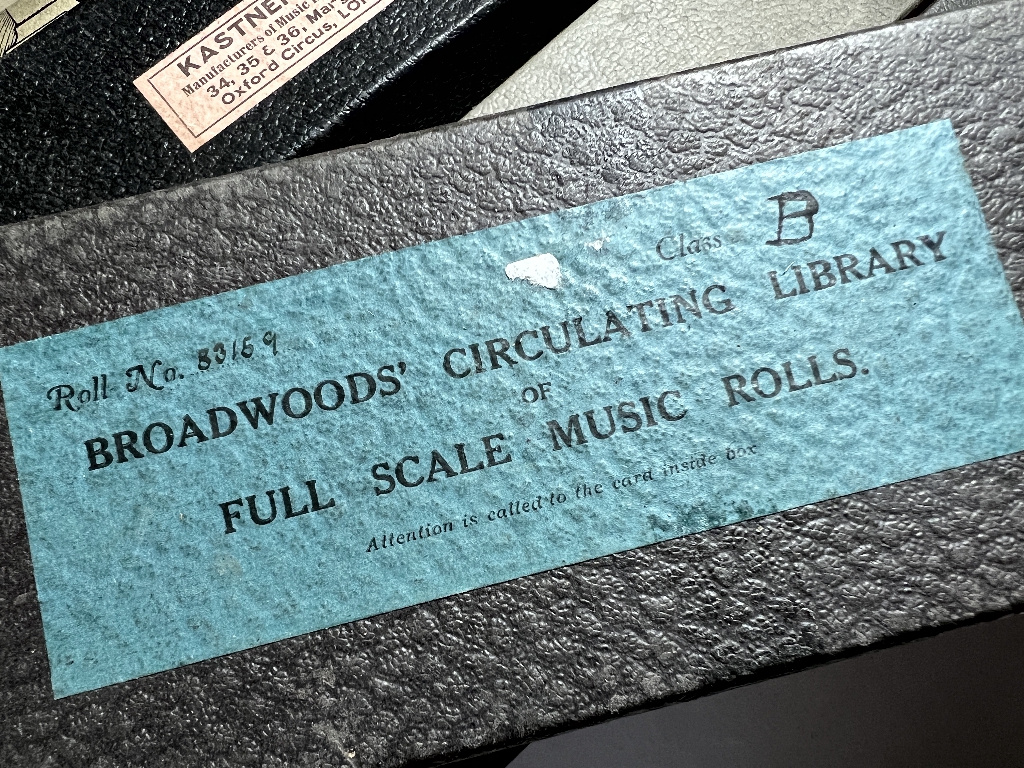
You can imagine going to your local library and borrowing some rolls for the week, for the entertainment of the family, and to invite friends around for a sing-along musical evening.
This is a label on the end of one of the boxes.
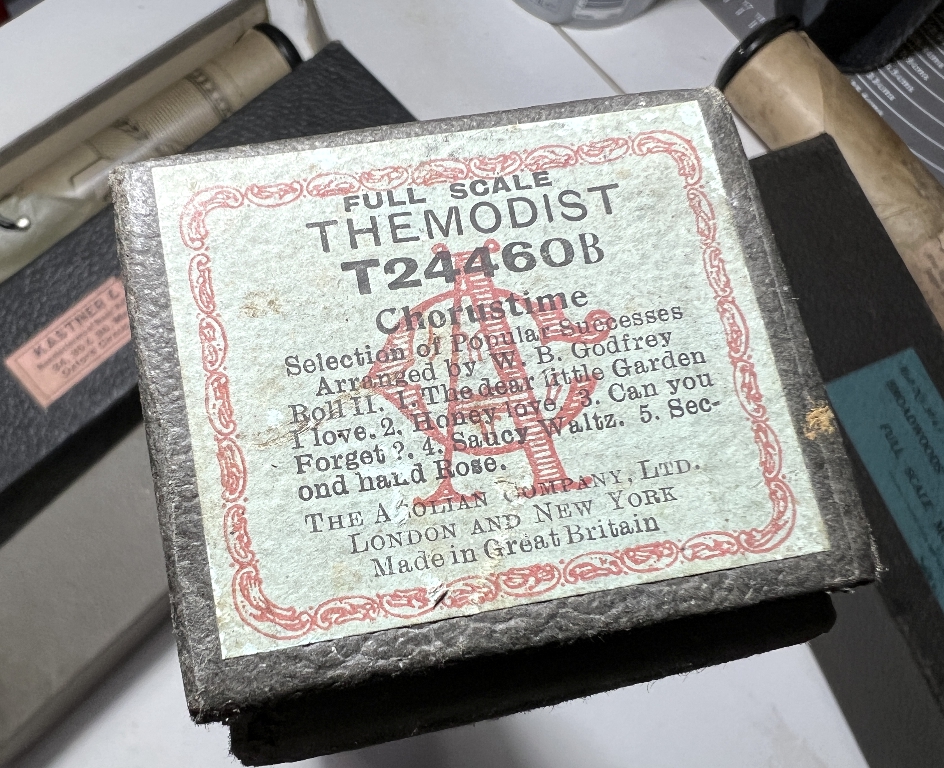
What delightful titles these songs have! My hubby’s friend says these rolls are now all useless because nobody wants this sort of music any more. How sad. I love the old tunes. The Victorian ones are so sentimental and melodic, and I adore the music of the Roaring Twenties and the big bands of the 30s and 40s…
Digression… my hubby and I are keen fans of the Fry & Laurie TV series “Jeeves and Wooster.” Wooster is often seen playing the piano and singing along, and most of the songs are utter nonsense and silly and funny. We were amazed to discover that they were not written for the show, but are genuine songs of the period – one of our favourites is “Four and Twenty Ginger-Headed Saaaaiiilors…” and also “Goosey goosey.” (I think I was born too late.)
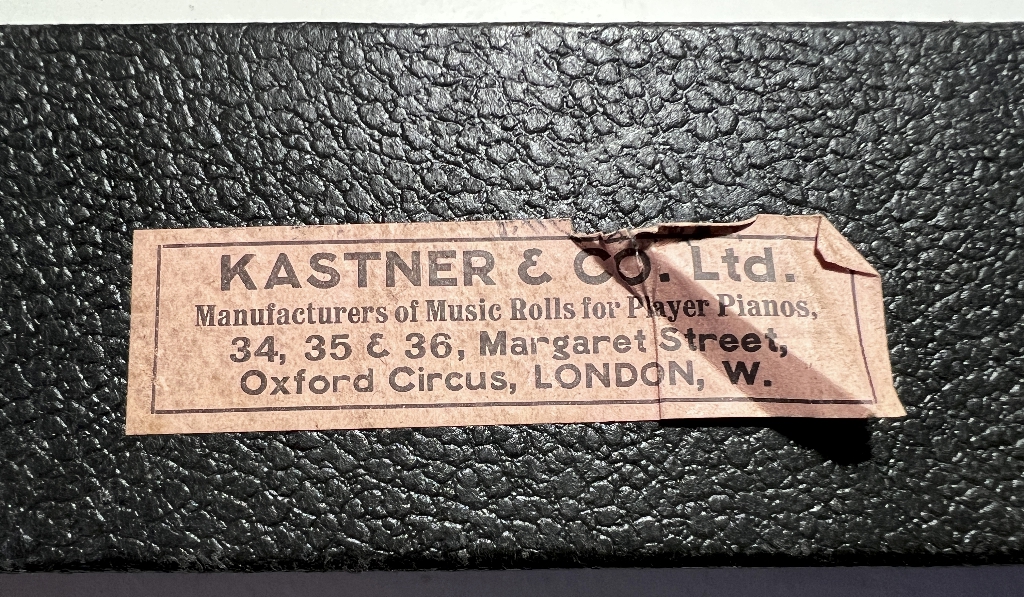
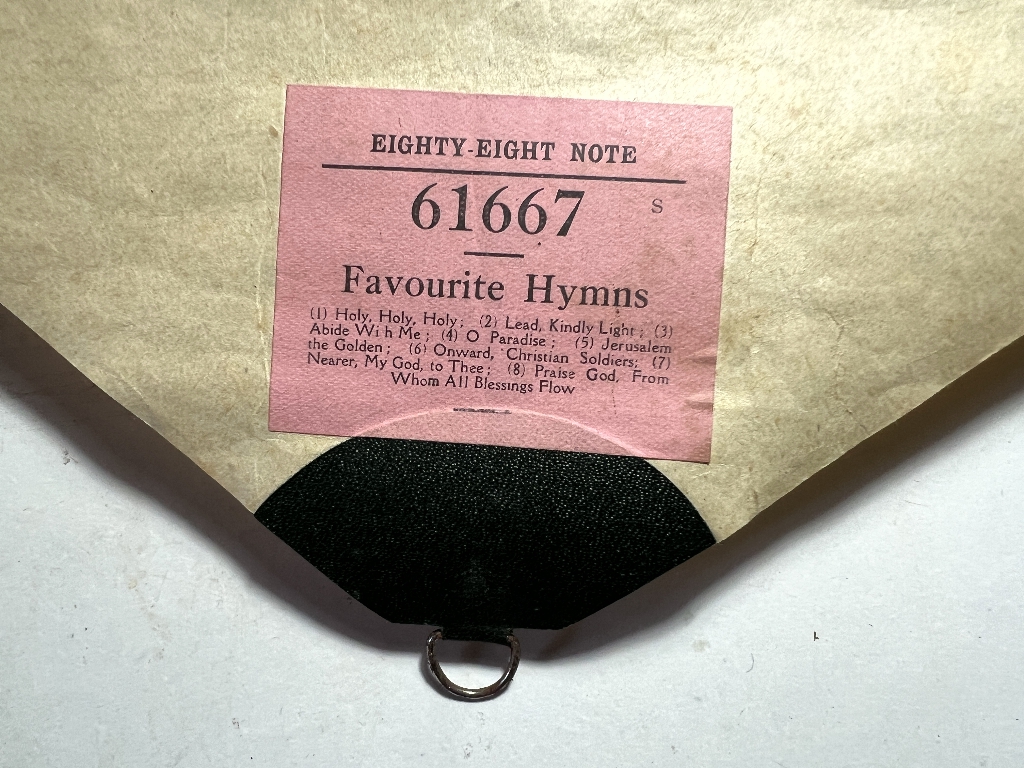
Back to my gift. A manufacturer’s label.
The rolls
The rolls themselves are also very attractive. Signs of a bygone age… These days, functional and mechanical things are rarely also beautiful to look at. The Victorians always made functional stuff beautiful (power stations and the like) and in the early part of the 20th century, labels were usually decorative as well as informative. All grist to the ravenous mixed media junk journalist’s mind!
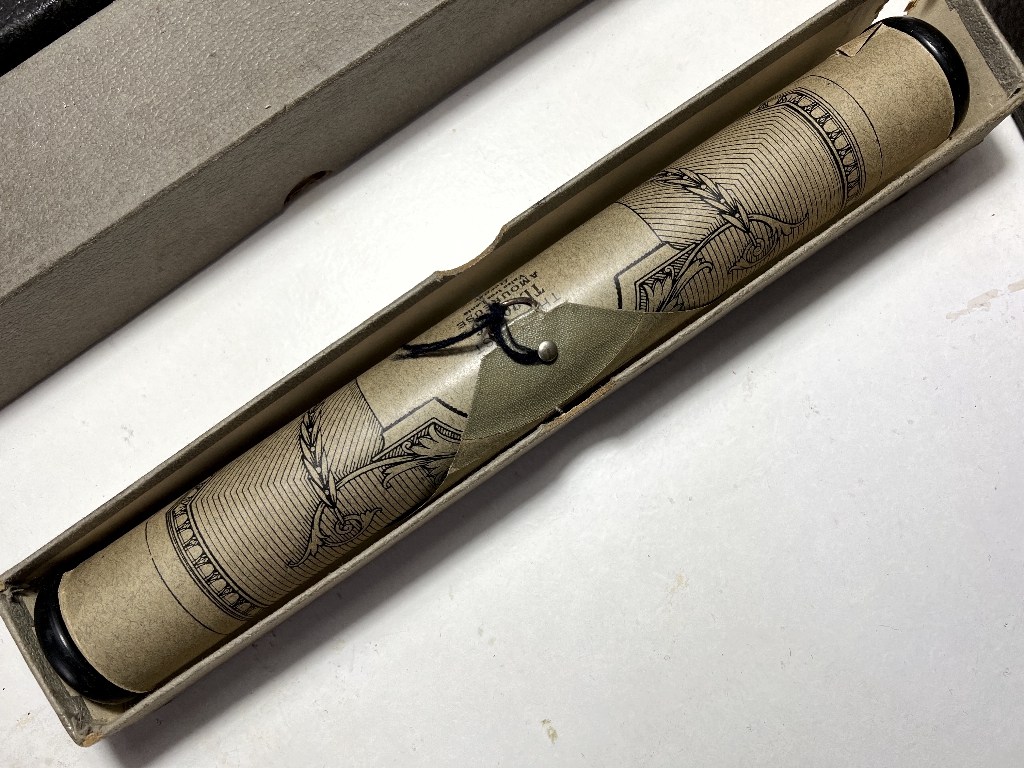
These rolls would need to be stored in sturdy boxes because they were made of paper and could easily get torn if mishandled.
The roll closure is a simple ring with a piece of twine wrapped around the roll and fastened around a stud. The ring is used to attach the roll to the mechanism so that it can unroll the paper and play the tune.
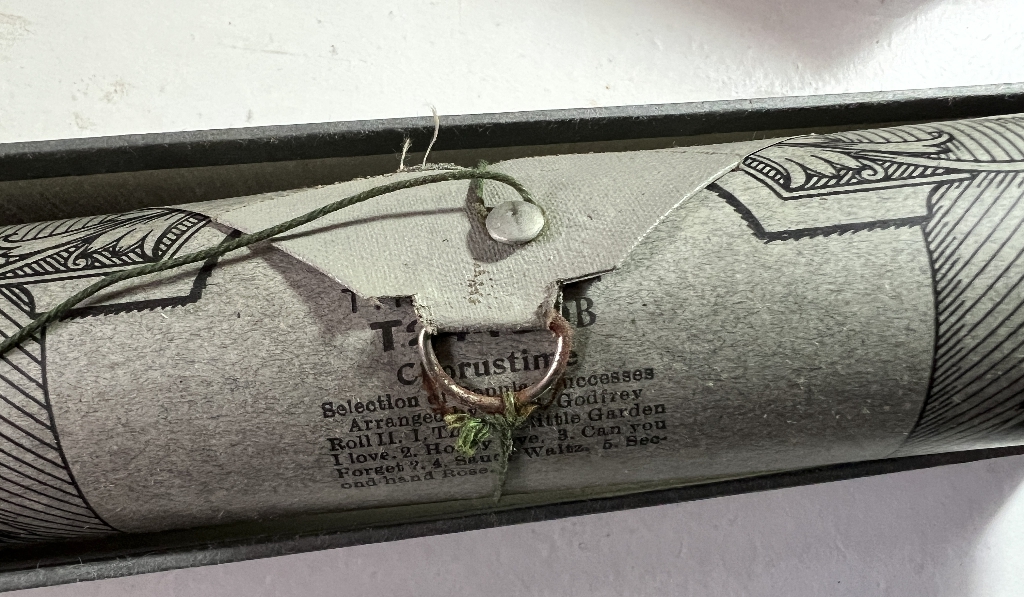
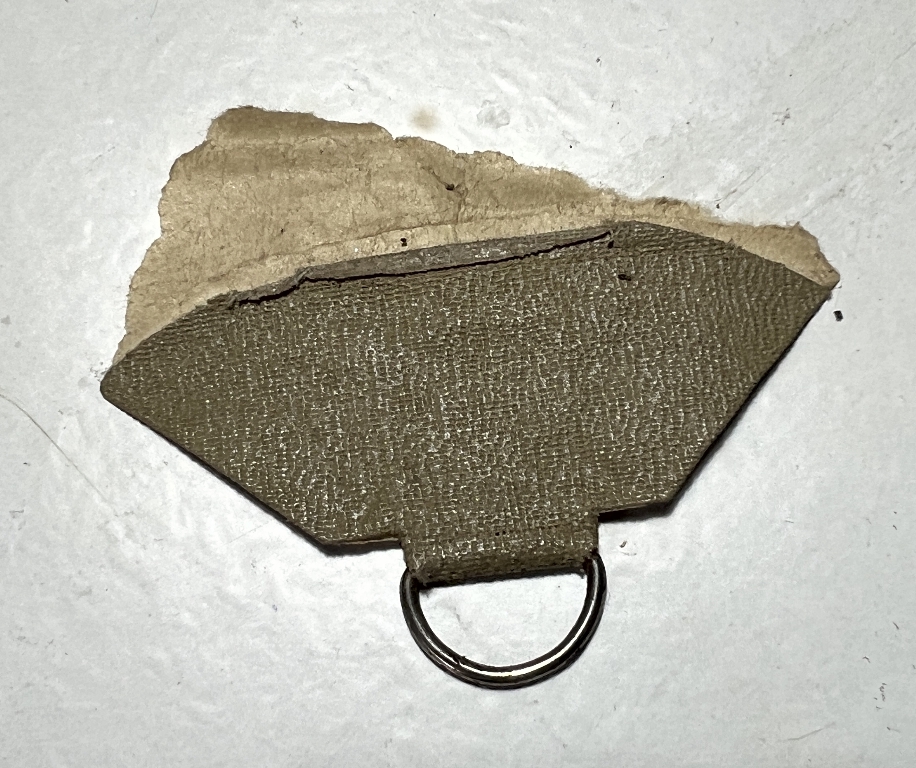
These closures will be most useful in my albums! There was a broken one in the bottom of one box.
You can see that the toughened end of the roll is also beautifully decorated with urns and swags and what-not. Just gorgeous!
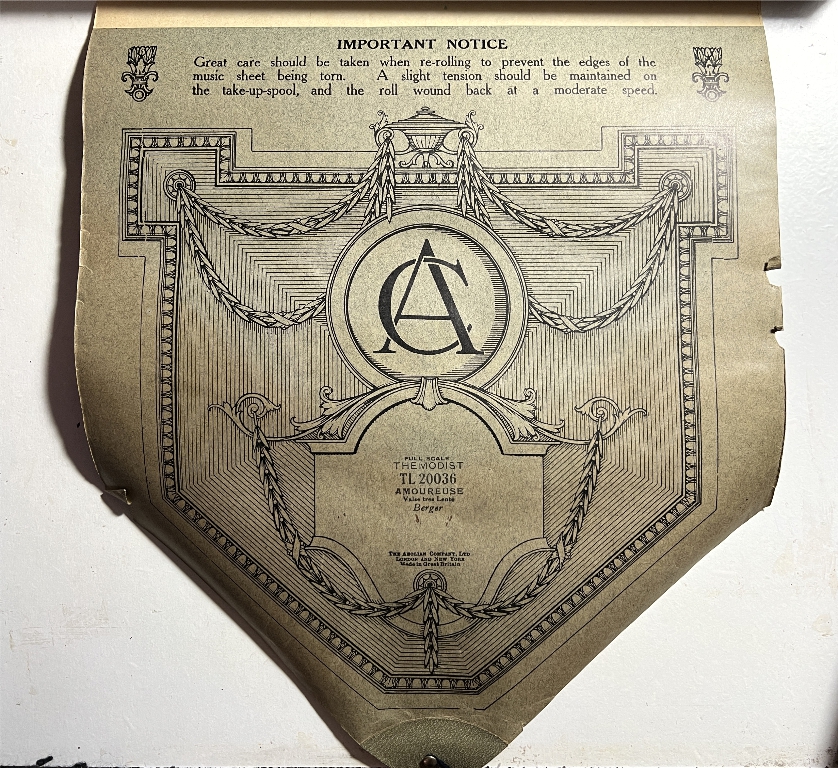
Isn’t this just delicious? When I asked for pianola paper I wasn’t expecting anything like this.
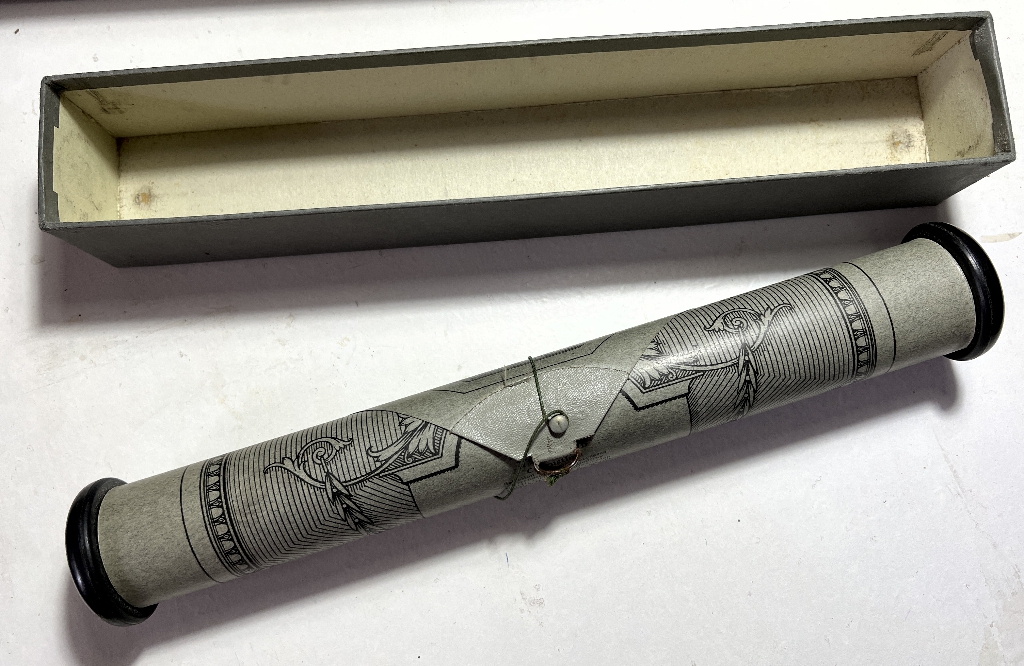
Out of the box, the roll itself is heavy, with its sturdy roller and quite a weight of paper.
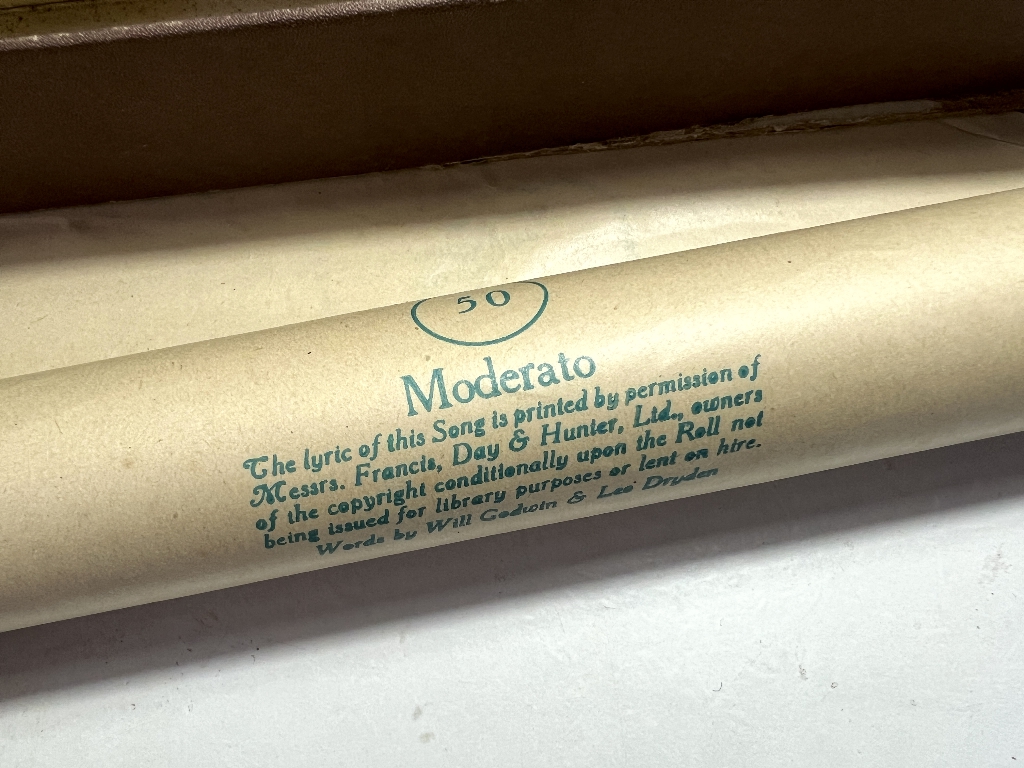
A copyright label on the roll.
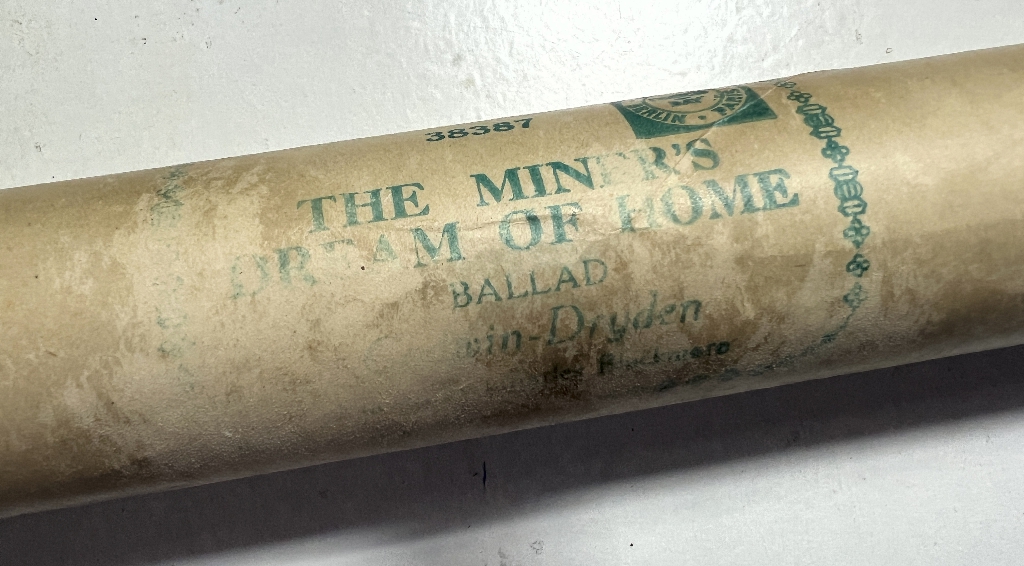
The title label on this roll (“The Miner’s Dream of Home”) is a bit damaged.
You can imagine the family gathered around the pianola on a Sunday evening for a hymn sing-along. Life was a lot simpler and more family-oriented in those days, when whole families would make their own entertainment. Our modern screens have a lot to answer for.
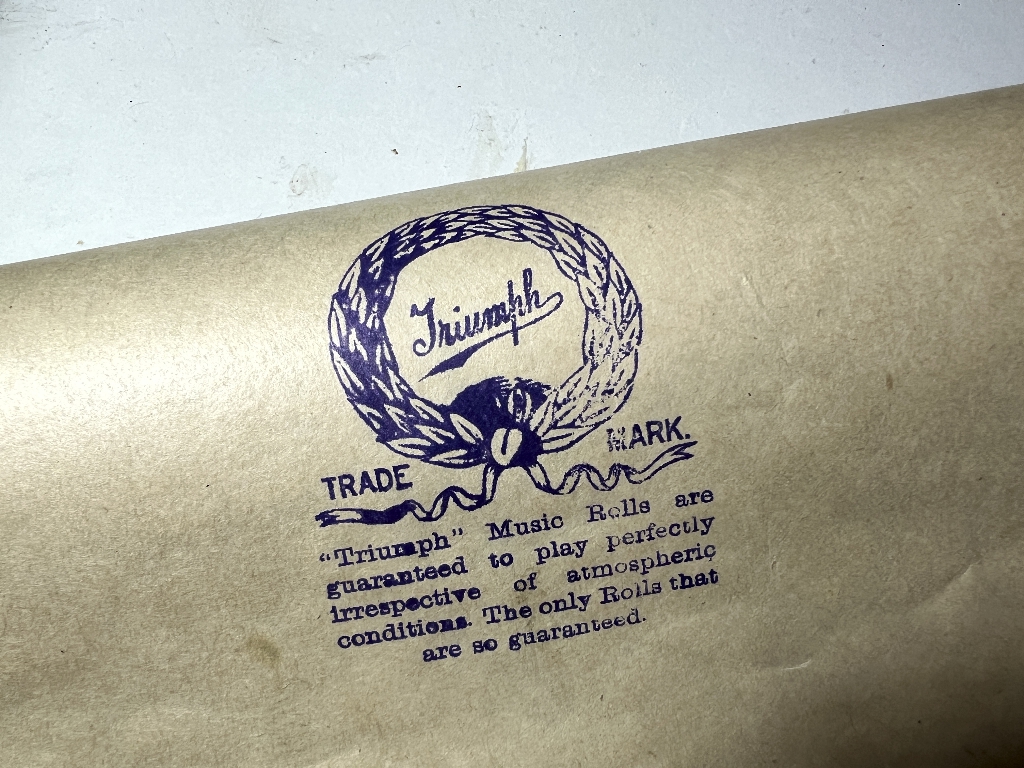
Guaranteed in the face of every atmospheric condition, but not against the mixed media artist!
The pianola paper itself
What you’ve been waiting for!
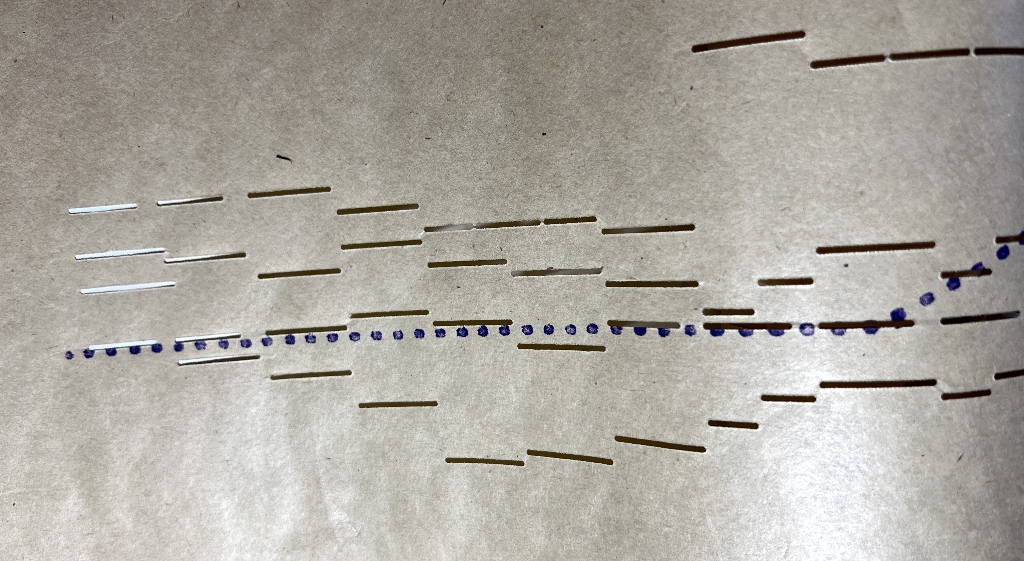
It looks random, but watching one of the YouTube videos, I could see what was being played as the paper rolled in front of my eyes – holes further to the right were treble, and those on the left were bass, and you could also see the shape of the chords and rapid notes going by.
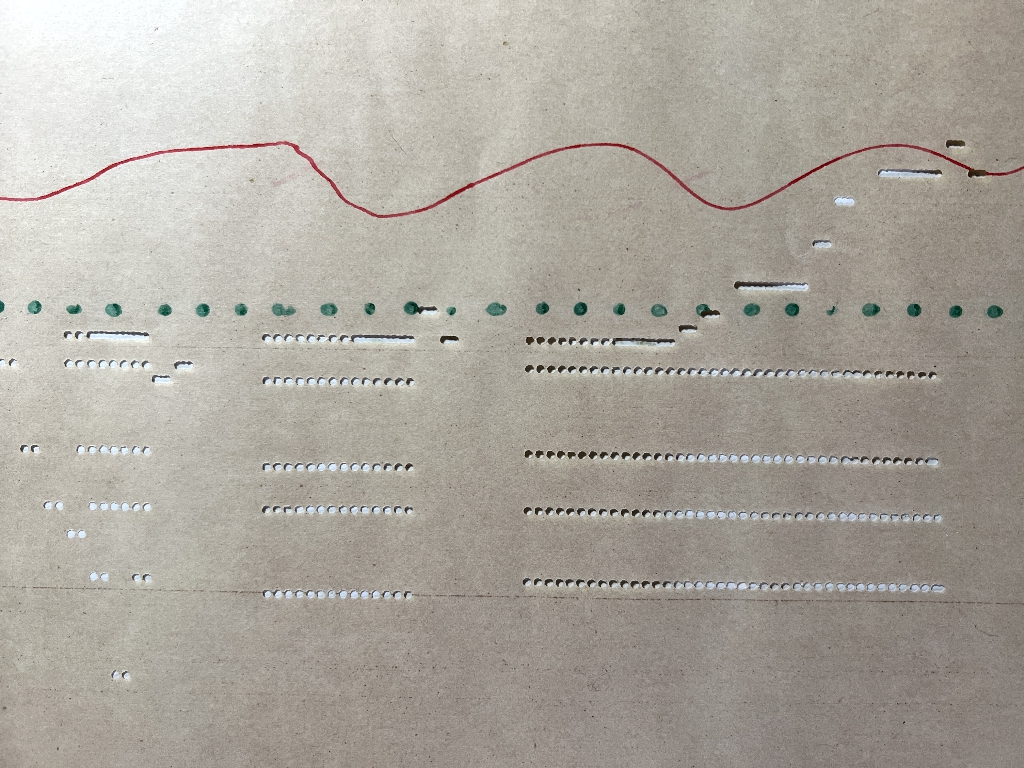
I am not sure what the red line or the green dots are for. The red line looks hand-drawn, and it may be an instruction to the operator regarding musical dynamics.
What am I going to do with these?
Many people are using them as background papers, choosing sections with a lot of holes in them. I certainly intend doing this. I also think one could stencil through them. I also have an idea of layering pieces of them, alternating them at 90 degrees, and getting some interesting pattens. Whatever I decide, these are fairly robust papers which are not too thick. They seem to have a slightly slick surface and I am not sure how well they will take inks, but people do seem to be using them in art without any problems. It is going to be fun experimenting.
Braille paper
I have also been trying to find a source of Braille paper with its wonderful texture of raised dots. My hubby is friendly with another family whose daughter is blind and he recently asked if she had any redundant Braille books she no longer wanted, but apparently she’s got rid of them all because everything is now electronic. Again, how sad. I have not been able to find any old Braille books online, and was hoping Ebay might be a good source.