SKETCH OF KINGSKERSWELL CHURCH
Today we attended the funeral of a friend’s mother. The weather was appalling all morning with torrential rain, which was so sad for the family. The burial took place first, in the churchyard of Kingskerswell Church. Rather than risking getting absolutely soaked, I remained in the car while my hubby attended the burial, and I decided to make use of the time to make a quick sketch of the church from the car window.
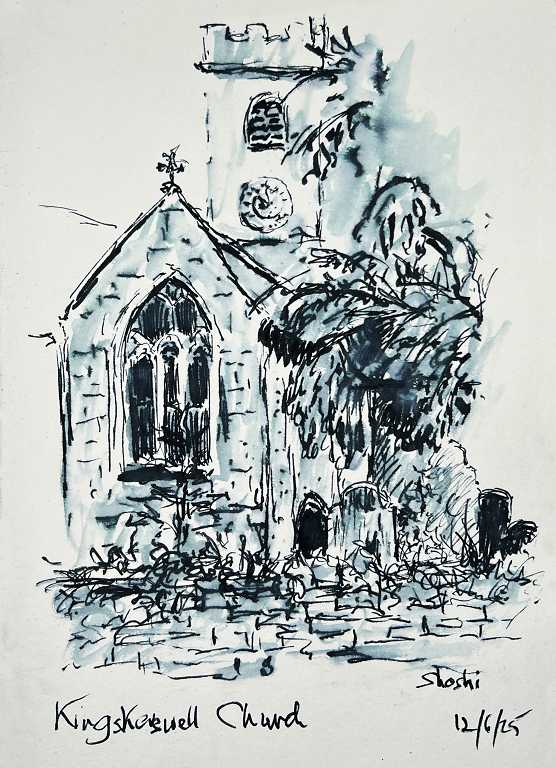
I used my 2.5 mm Elegant Writer pen and water brush to make this very rough quick sketch, and put the final touches to it as my hubby was returning to the car. The ceremony had been kept brief because of the weather.
We then proceeded to a church in another village for the memorial service, with the wake in the local village pub afterwards. I showed my sketch to one or two people and they suggested I showed it to family members. They were so delighted with it that I offered to send them a photo of it, to which they readily agreed. This was a short moment in time, captured at the moment their mum was being lowered into her final resting place in this quiet place, so has great sentimental value for them.
Initially I was disappointed about the rain, but if the weather had been fine, as it was later on, I would have attended the burial and not done the drawing. I am now glad that it rained, even if it wasn’t so pleasant for those who attended!
Kingskerswell
This is a village in south Devon. The king after whom it was named was William I, or William the Conqueror, the first Norman king of England. “Kerswell” is derived from “cress well,” or a watercress bed. I love to think of the king pottering about in his wellies, tending his watercress! The same must apply to neighbouring Abbotskerswell. Did crown or cloister boast the better crop? Was this the beginning of the ongoing conflict between monarchy and monastery, resulting in the final victory of King Henry VIII with his dissolution of the monasteries in the late 1530s? Is salad the driving force behind English history? Points to ponder in a quiet English churchyard.