DOUBLE TRI-FOLD JUNK MAIL FOLIO PART 6 – BACKGROUND INFO FOR SECOND FOLIO DECORATION – ANTIQUE BOOK
I’m digressing from the main project in this post, because I want to share with you the source of some of the decorations for the second folio. If I included this in that post it would make it too long.
An antique book
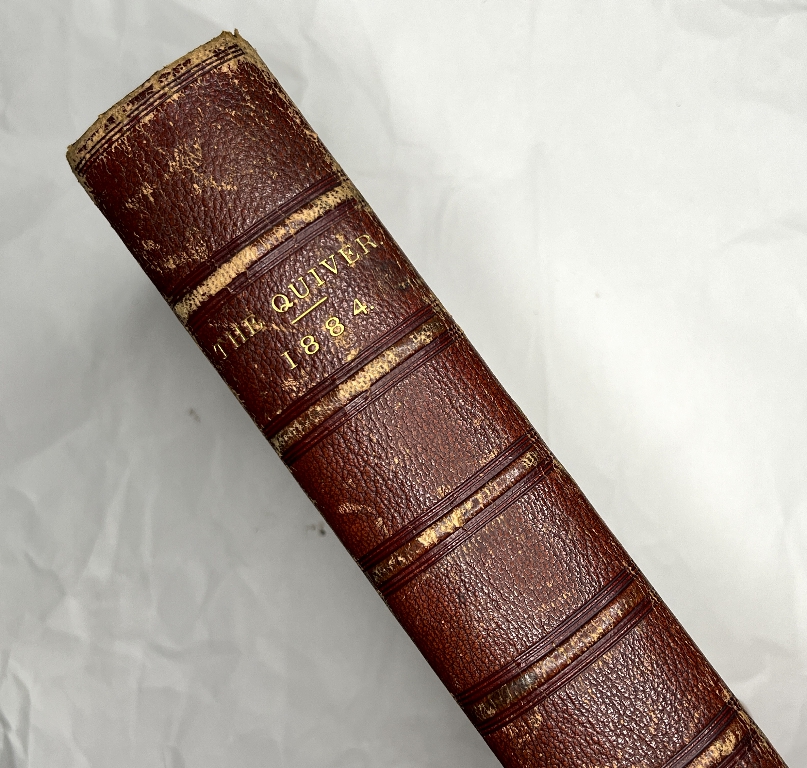
Some time ago my hubby bought me an old Victorian book from Ebay as a source for embellishments for my art. It is called “The Quiver,” and it dates from 1884. Wikipedia’s entry states, “The Quiver (1861–1956) was a weekly magazine published by Cassell’s and was ‘designed for the defence and promotion of biblical truth and the advance of religion in the homes of the people.'” This book is a compilation of all the issues for that particular year, and it is full of stories, articles and poems, and the occasional musical pieces and songs, and delightful engravings. As much as anything, it is an interesting social history of the time. I have dipped into the text but have not read the bulk of it.
The book is in an extremely poor state of repair with a great deal of damage. My original thought was that I could restore it, and I did some research into this, but decided in the end that it required the expertise of a professional book restorer, and while in time I could learn how to do it, I thought my time would be better employed elsewhere. I therefore decided to go with my hubby’s original intention that this should merely be a source for material to be cut up and used. Many people are averse to the destruction of books, particularly old ones, but my opinion is that in many cases they end up in landfill because they are too old-fashioned and nobody reads this kind of material any longer, and if they are damaged beyond repair, it is a way of giving them a new lease of life.
The book is heavy, and its binding is beautiful.
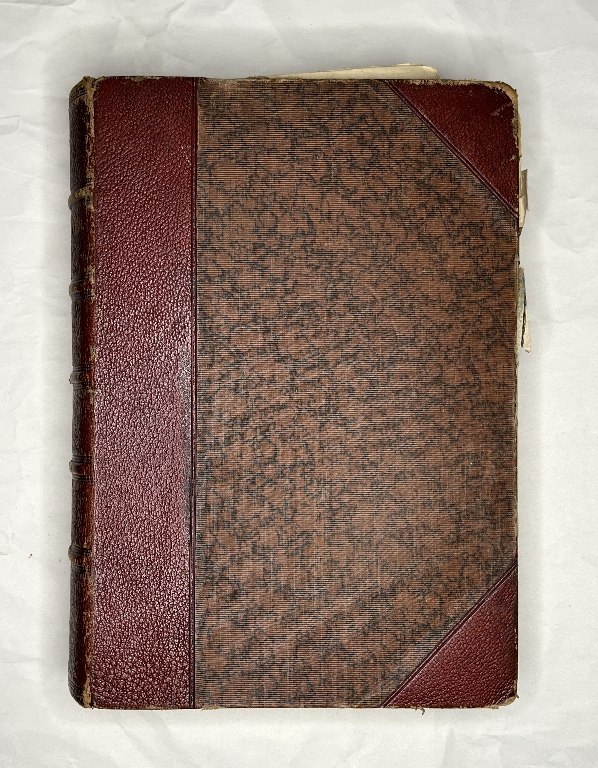
One day I may use this as a cover for an album.
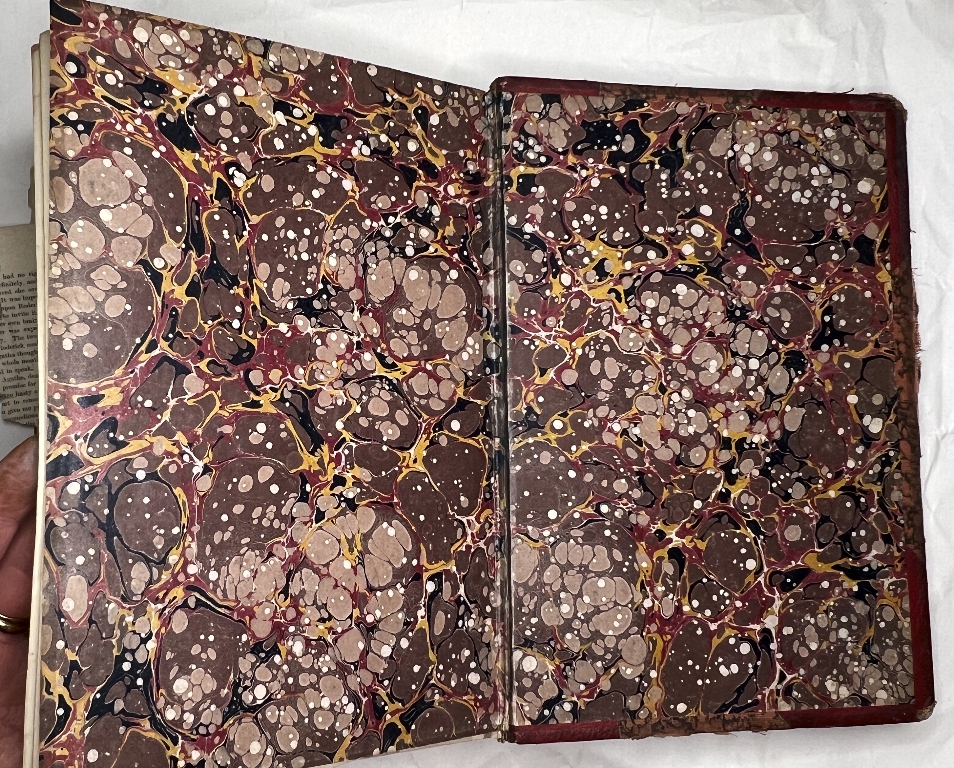
It has gorgeous marbled endpapers. I propped the book up to show the endpapers inside the back cover, where there is less damage, and to avoid reflections.
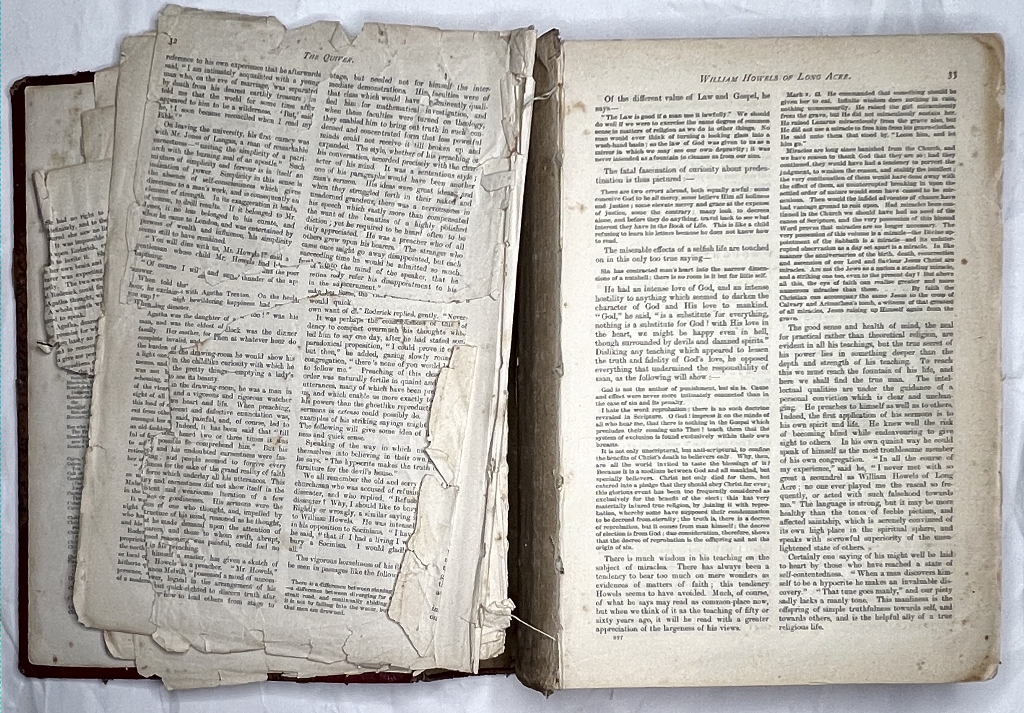
As you can see, the book is in a state of extreme dilapidation, worst at the beginning. The binding is falling apart and many of the pages have disintegrated.
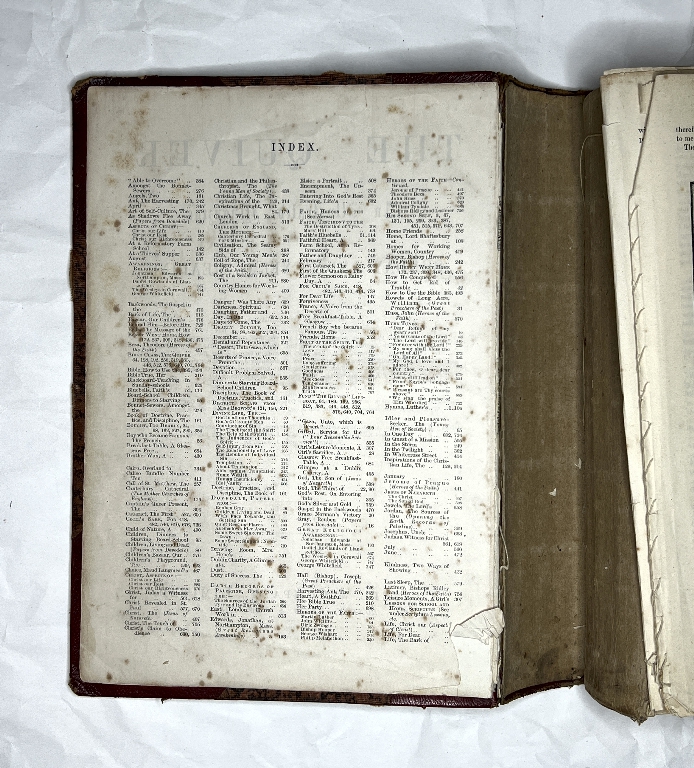
There is genuine foxing on the pages, especially those at the beginning of the book, and the colour of the paper is beautifully aged. It is brittle, as is the way of old paper, and for art purposes will always need to be backed to strengthen it.
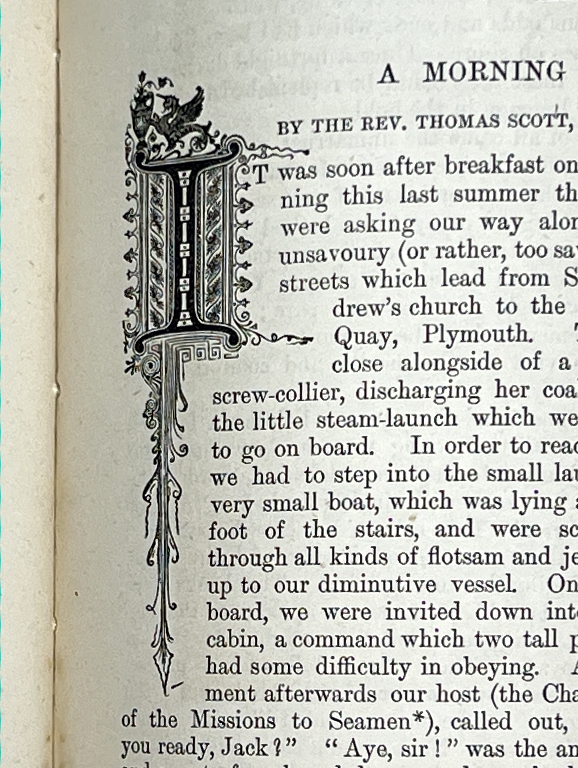
The pages have delightful decorations and decorated initial letters like this:
Here are some examples of the engravings throughout the book, many of which illustrate the poems and stories, and there are also portraits of real-life people, the subjects of the various articles.
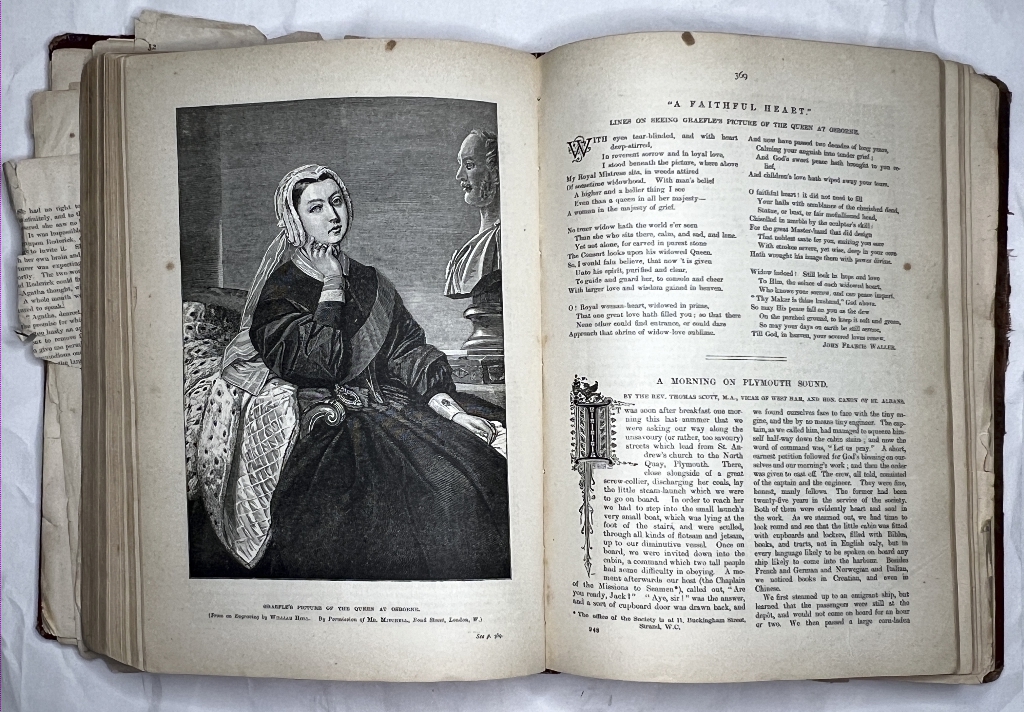
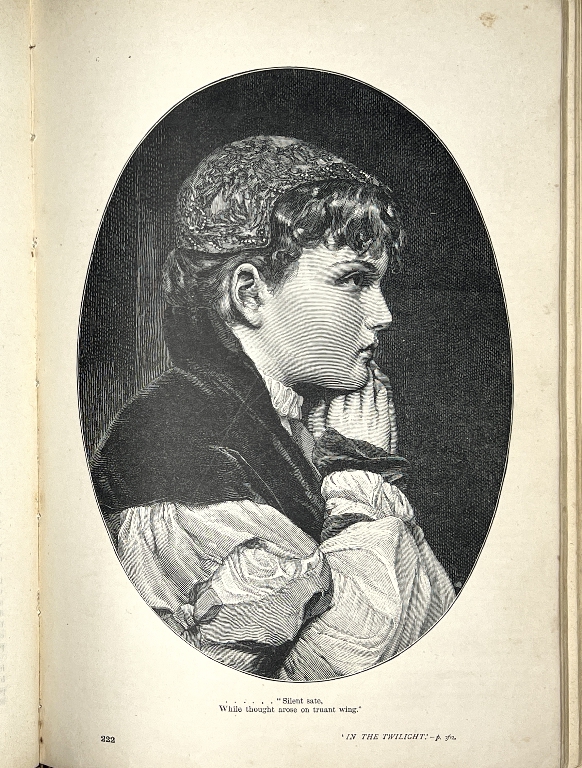
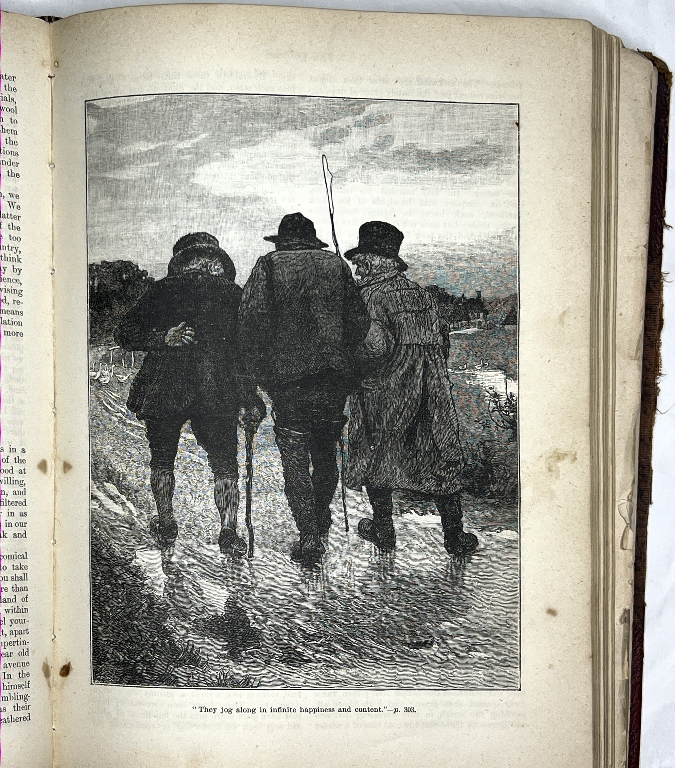
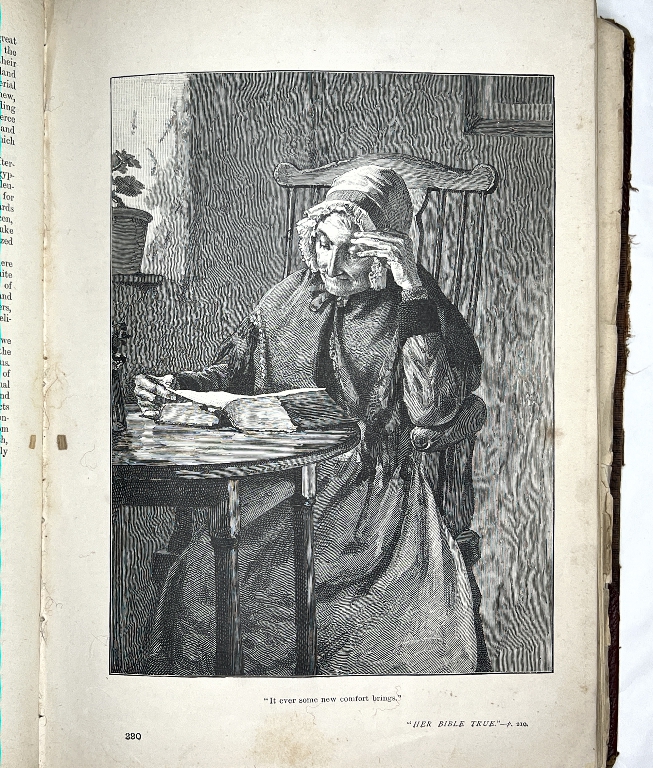
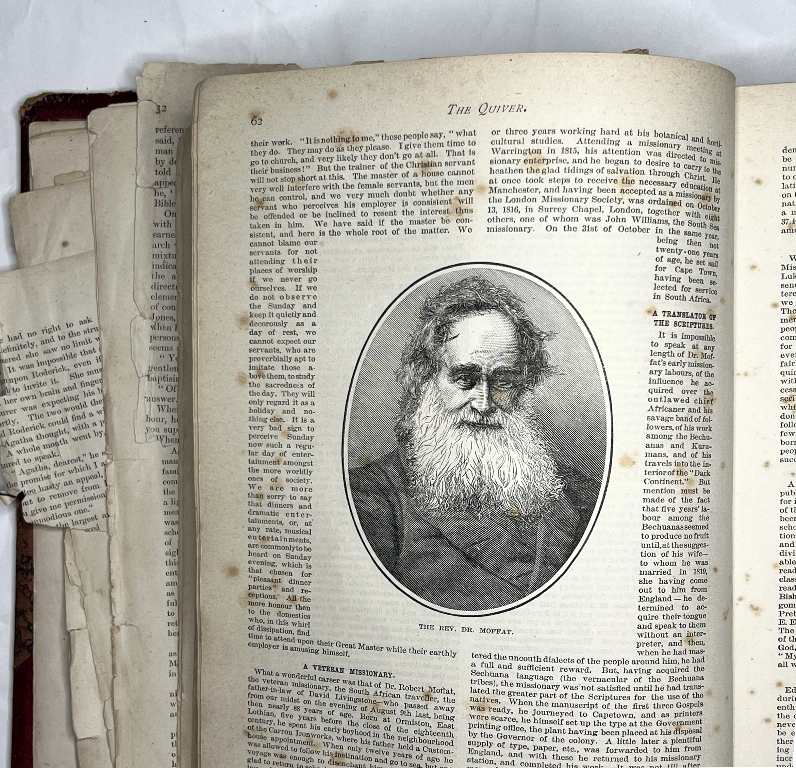
As you can see, this is an absolute treasure, and a wealth of supply for collage. I do feel sad about destroying this book in some ways, but it is better that it has a future in a different form, than being ultimately lost forever.