ECO-PRINTING – FIRST EXPERIMENTS WITH EMBOSSING MACHINE
Collecting leaves
Today my hubby came home armed with a wonderful collection of leaves for me to play with in the studio. I thought I’d better get on with this project as soon as possible, before the leaves dried out too much and became papery and useless.
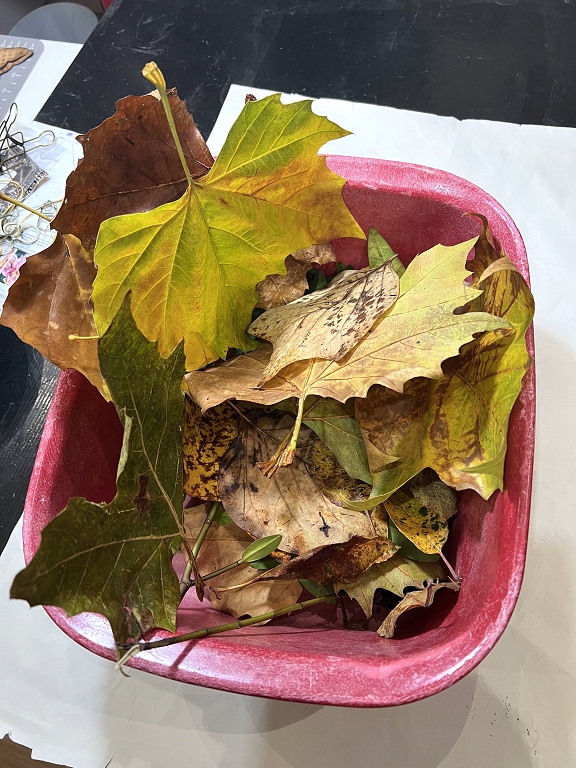
He was in Sainsbury’s car park and was about to start collecting some fallen leaves when he spotted the attendant about to sweep them all up! He managed to dissuade her and picked up a glorious collection. I particularly liked the variety of colours in these sycamore leaves.
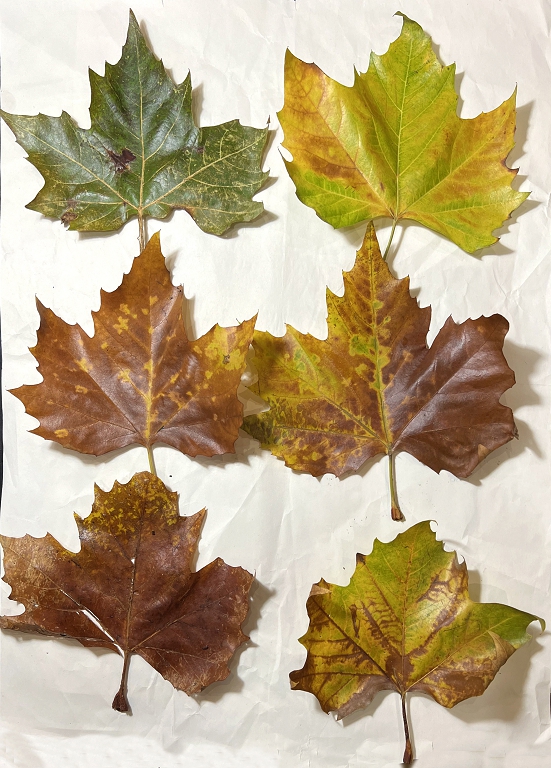
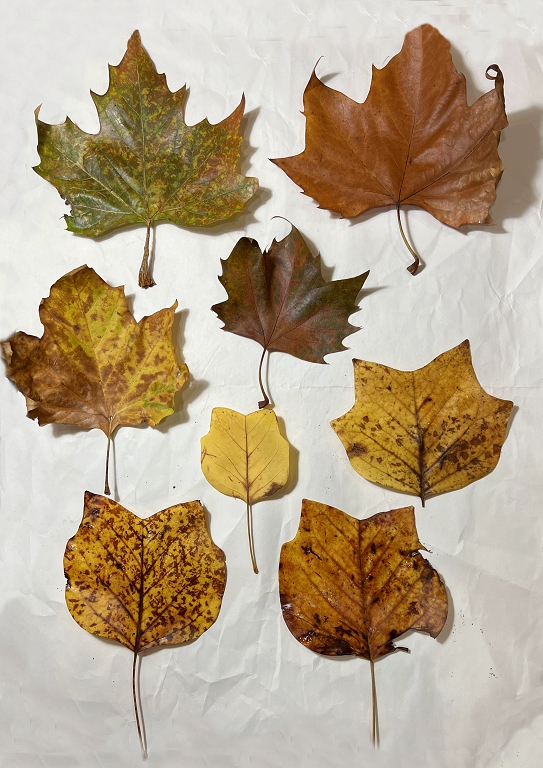
I do not know what tree the leaves at the bottom of the above photo came from. They are a most unusual shape.
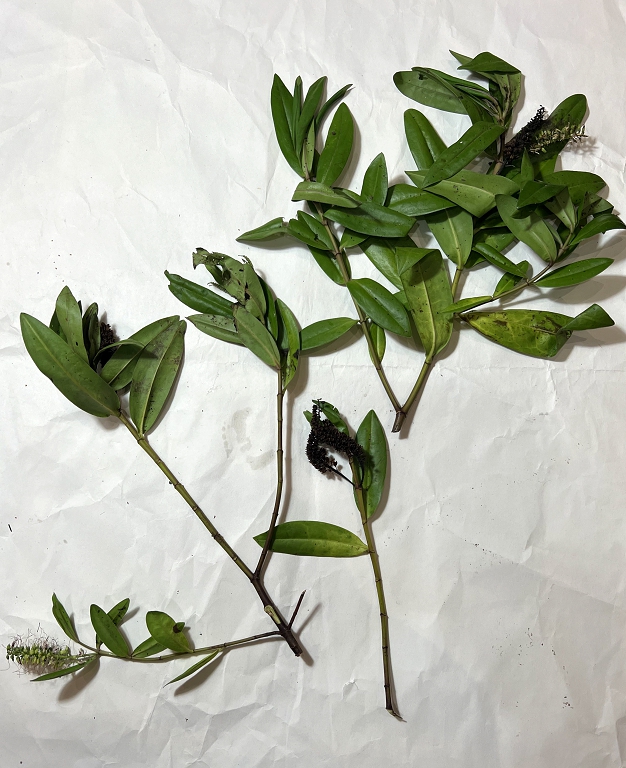
From our garden, he also picked this leafy branch.
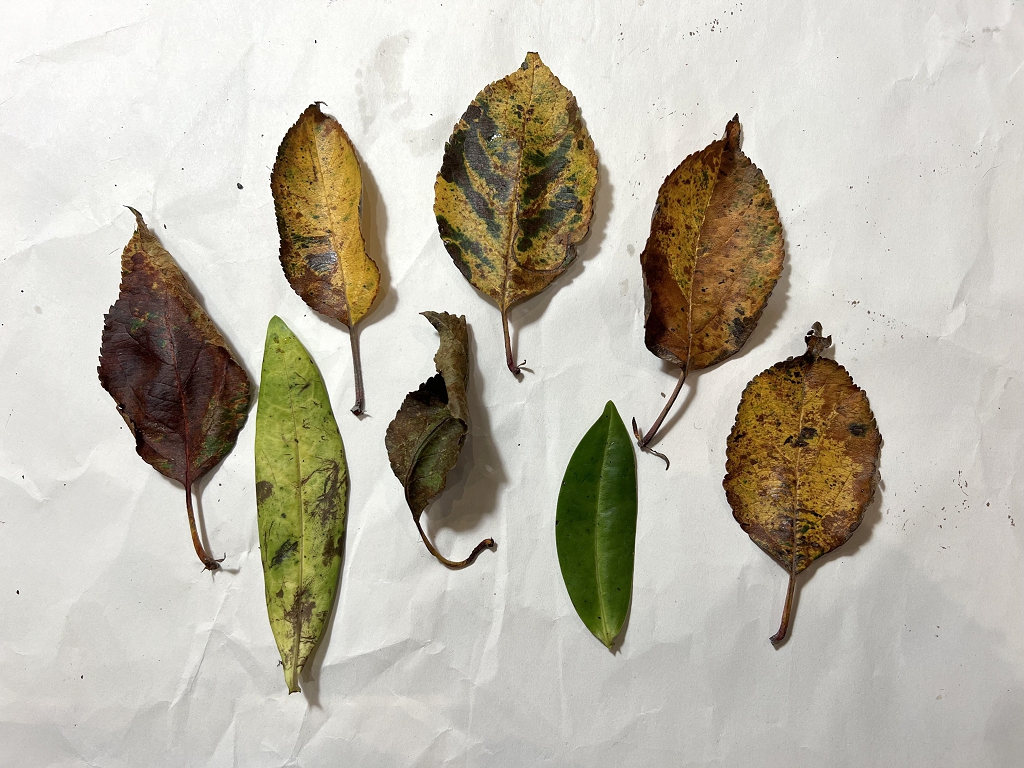
Leaves from our apple tree, and a few others.
Setting up for eco-printing
Following Dragana on Saacibo (YouTube), I was keen to try her quick eco-printing of plant materials using the Sizzix Big Shot. I do not have this die-cutting/embossing machine, but I have a small Cuttlebug, and also the much larger ToDo machine which will also do hot foiling. I received this latter machine as a gift form someone who no longer needed it.
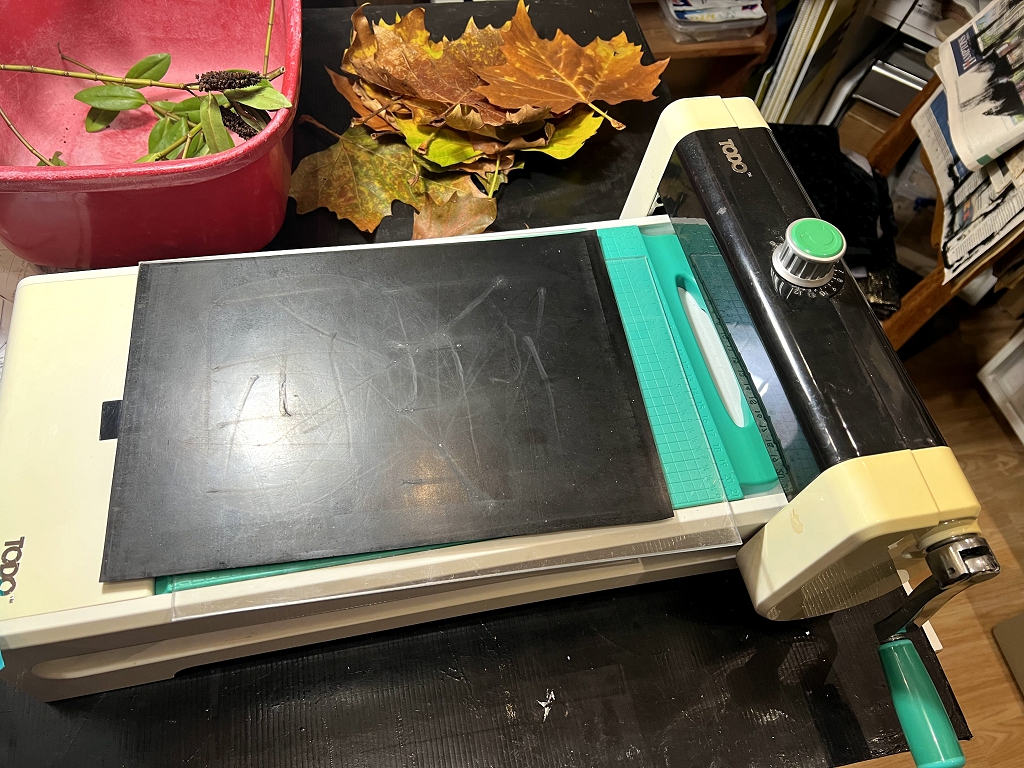
The great advantage of this machine over the others is that the space between the rollers can be adjusted, using the circular knob on top of the carriage. When you turn the handle, the carriage containing the rollers moves along the length of the bed. With other machines, the rollers are static, and the work feeds through between them as you turn the handle. The ToDo is much more like a printing press. I don’t use it very often but today it was essential, because the leaves I wanted to eco-print were too large to go through the Cuttlebug.
I had to experiment with different sandwiches of plates and an embossing mat, and also the pressure of the rollers, before I found a combination which would actually feed through the machine with the correct amount of pressure. Eventually all was well, and I began my experiment.
I used pages from the sketchbook which I bought for the online drawing course in which I took part last year. This paper is thicker than printer paper and has a softer texture. I do not know the details because the book has a plain brown cover and no printed details. I think it was an unbranded sketchbook from Amazon. I have another one unstarted, so I have plenty to play with.
Mixed results!
I began with the gorgeous sycamore leaves. They embossed the paper but absolutely no colour came from them. Dragana says that not all leaves are suitable. Shame, because these were the most beautiful of the collection. Other attempts were also pretty unsatisfactory, producing very little colour except from the main stem of the leaf.
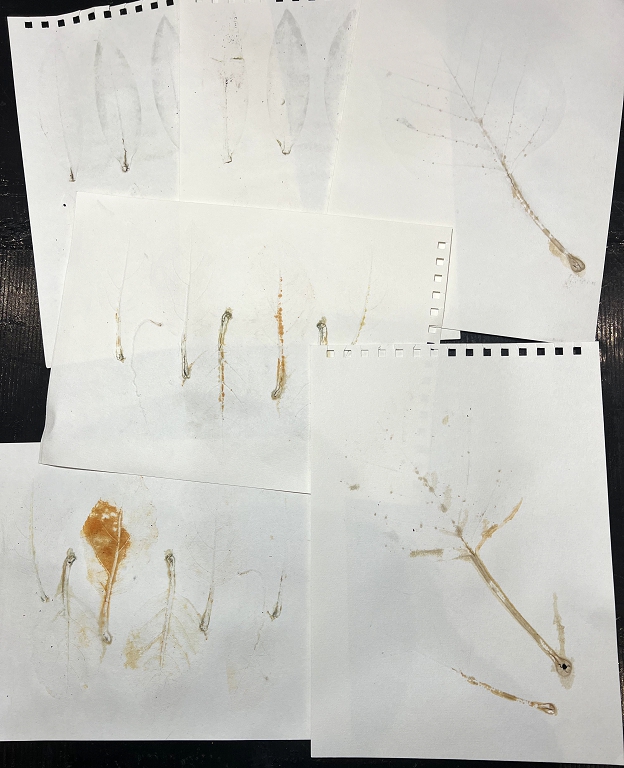
I had much better success with those unusually shaped leaves.
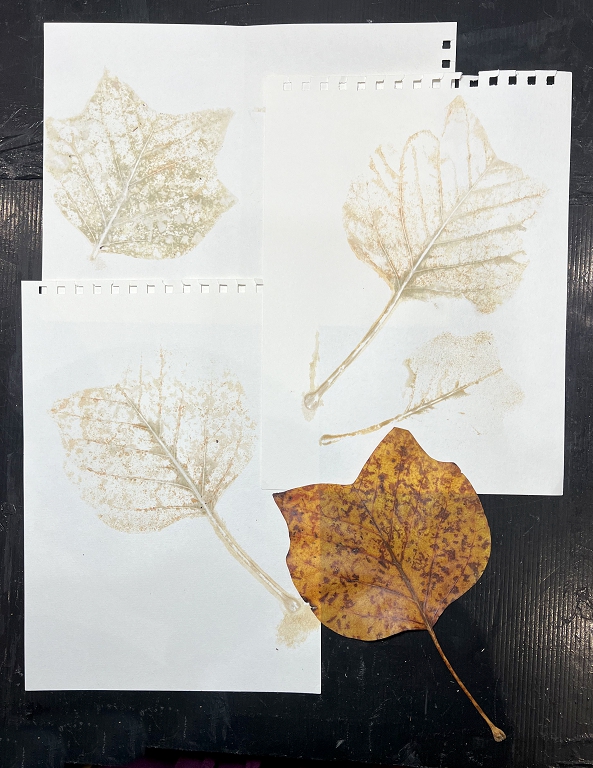
Painting with rust water
Dragana showed the dramatic results of painting these prints with rust water. As the solution hits the eco-print, it immediately turns it black. The effect is amazing to watch. Rust water goes on very pale, and darkens as it dries.
I decided I had nothing to lose by trying this technique with my less successful prints. Here they are while the rust water is still wet.
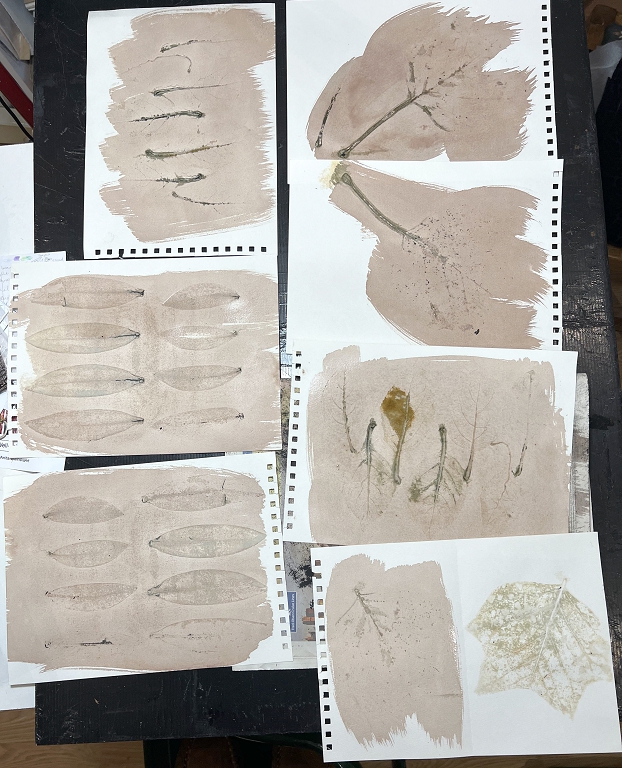
With some of them, you can definitely see a bit more detail.
I returned later, to see how they looked after the rust water had dried.
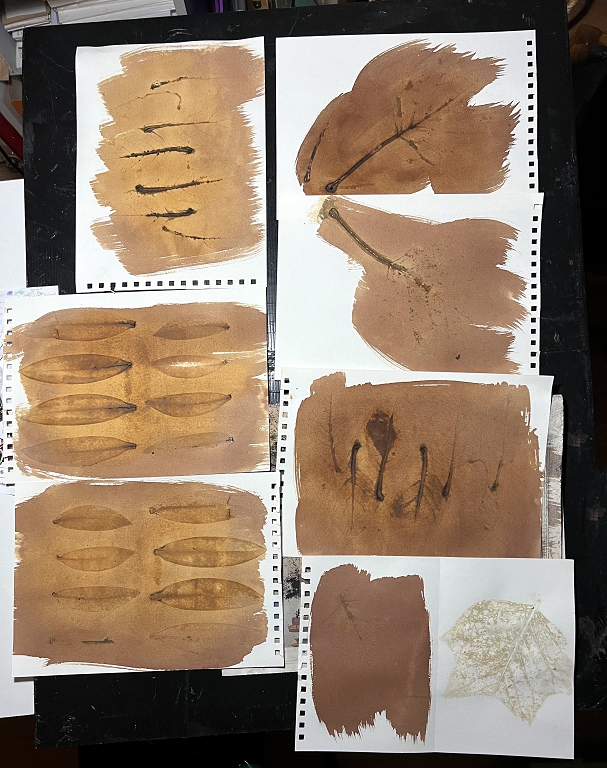
Where there was virtually no colour from the printing process, the rust had little effect, but where there was a little more, the rust definitely improved the print.
I think I can use all these papers. The unsatisfactory ones will make good collage fodder. What marks there are look like random mark-making.
The one at the top right-hand side of the above photo is interesting. If you fold the paper, and place a leaf inside and print, the colour is supposed to make two images, mirror images of each other. You can glue the two sides of the paper together back to back, and cut out the shape, and you have a perfect specimen sample. However, I found that one side of each print was much lighter than the other, or completely absent.
The narrow leaves on the left were from the leafy branch.
I need to experiment with different leaf varieties. The ones that didn’t work can still be used, however. They can be pressed, or preserved with glycerine, which makes them very pliable and with the feel of leather.